Our group’s research spans the directions outlined below and emphasizes the rich intersections between them.

Free-electron-driven light-matter interactions
We study light–matter interactions in nanoscale structures mediated by free electrons. Our work focuses on free-electron-driven radiation phenomena, including Smith–Purcell emission in nanophotonic systems and the theoretical foundations of the (quantum) Vavilov–Cherenkov effect. More generally, we investigate how engineered photonic mode structures control the properties of free-electron radiation—such as its spectrum, polarization, directionality, coherence, and quantum statistics—and how free electrons can coherently interact with other quantum systems, including qubits.

Nanophotonics and quantum optics for X-ray imaging
We develop nanophotonic and quantum-optical approaches to X-ray imaging that transform scintillators into detectors with enhanced spatial, spectral, and temporal sensitivity. By integrating metasurfaces and nanophotonic structures directly with scintillating materials, we shape and enhance radiation-induced light emission, enabling simultaneous gains in brightness, resolution, and accessible measurement channels. By combining nanophotonics with photon statistics, quantum correlations, and computational imaging, this work aims to overcome fundamental efficiency–resolution trade-offs and establish new X-ray imaging modalities with reduced dose and enhanced functionality.

Quantum and nonlinear optics at extreme wavelengths
We explore quantum optical phenomena across a broad range of wavelengths, with a particular emphasis on regimes that extend beyond conventional visible and near-infrared optics. Our work investigates how quantum states of light can be generated, manipulated, and detected at extreme wavelengths—including the deep ultraviolet and X-ray regimes—and how these capabilities enable new forms of light–matter interaction, sensing, and information processing. By connecting nonlinear and quantum optical effects to platforms such as nanophotonic resonators and scintillation-based X-ray detection, we aim to establish experimental and theoretical frameworks for quantum optics in regimes where single photons can encode and transduce information carried by high-energy excitations.
Integrated photonics for computing, sensing, and communications
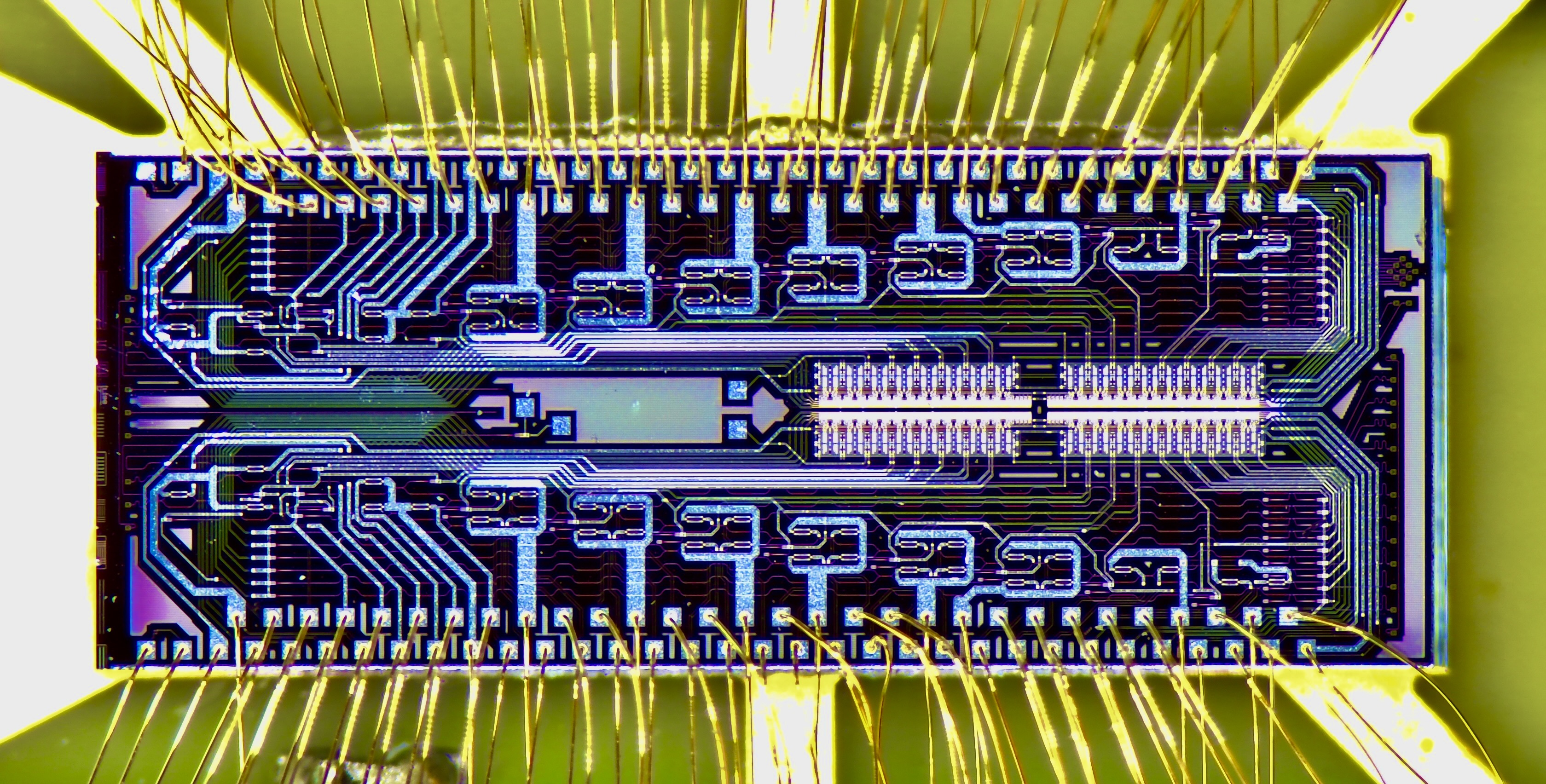
We develop variational photonic processors and algorithms that exploit the wave nature of light for both computation and sensing. By leveraging interference, massive parallelism, passive propagation, and intrinsic noise in photonic systems, our work enables self-configuring optical hardware that learns task-specific representations directly from physical measurements. These variational optical processors provide a unified platform for scalable computation, optimization, and high-dimensional sensing, offering new routes to tackle problems that challenge conventional electronic architectures.

Computational metaoptics
We develop metasurfaces and nanophotonic structures for compact, multifunctional optical systems that go beyond the limits of conventional optics. By combining advanced metaoptic architectures with computational imaging and end-to-end inverse design, our work jointly optimizes optical hardware and reconstruction algorithms for imaging, sensing, and inference tasks. This hardware–software co-design paradigm enables aberration-corrected, information-efficient optical systems and extends naturally to polarization, spectral, and high-dimensional optical measurements.
Nanophotonics for integrated nuclear clocks
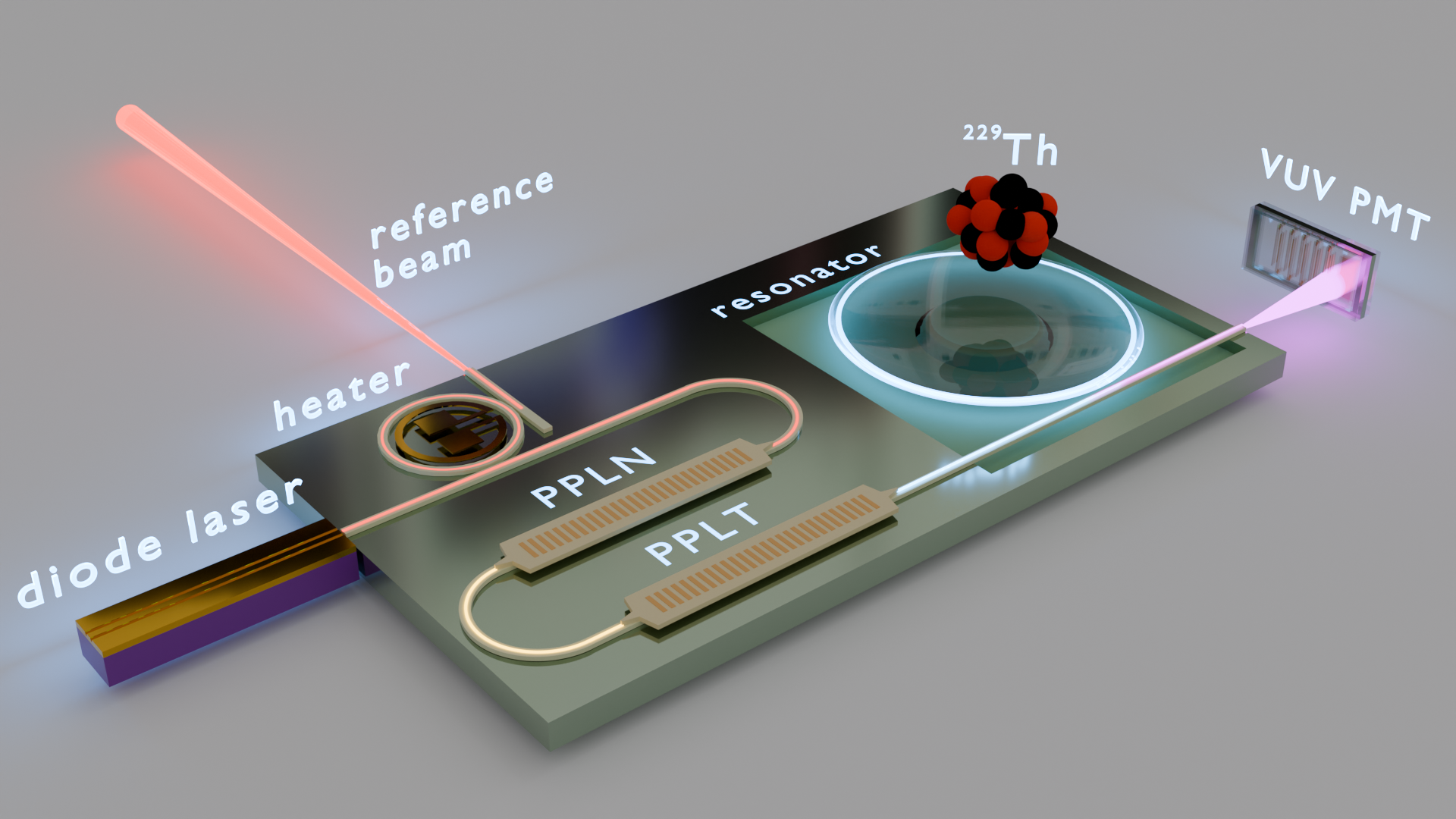
We explore how high-Q nanophotonic resonators can enhance light-nucleus interactions in Th-229 and enable compact, solid-state optical nuclear clocks. This work connects integrated photonics, nuclear physics, and many-body quantum optics to develop scalable clock architectures and active frequency standards based on nuclear transitions.